
Description
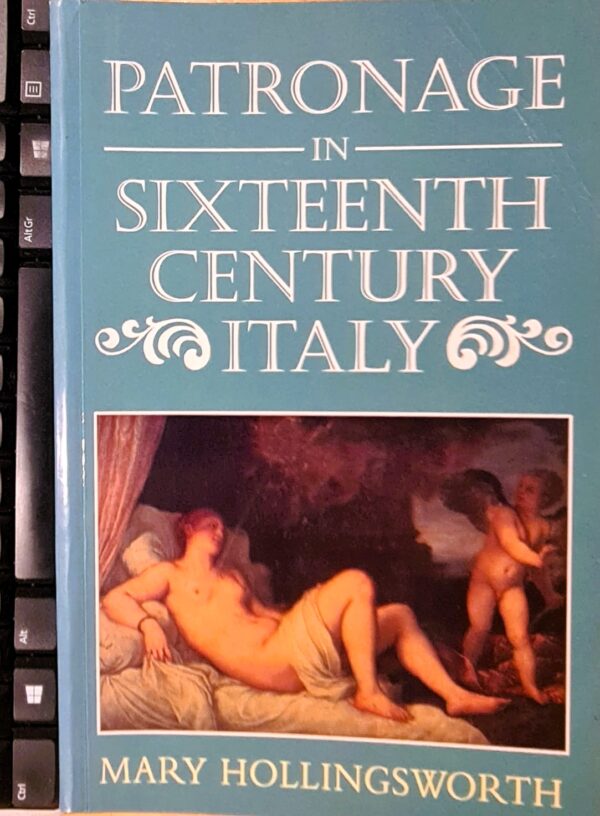
Patronage in Sixteenth-Century Italy by Mary Hollingsworth is a major scholarly study of how art functioned within the power structures of Renaissance Italy. Rather than focusing only on artists and masterpieces, Hollingsworth shifts the attention to the patrons — the rulers, wealthy families, and church figures who commissioned the works and controlled how art was used.
The book argues that patronage was not simply about supporting artists, but about politics, influence, social status, and religious strategy. Through detailed historical research, Hollingsworth shows how elite families used art as a calculated tool to strengthen their position, shape public image, and secure spiritual legitimacy. It also builds on her earlier work, Patronage in Renaissance Italy: From 1400 to the Early Sixteenth Century, making it an essential follow-up for readers studying Renaissance culture in depth.
This is a serious academic work rather than a general introduction, and it will appeal most to students of Art History, Renaissance studies, and readers interested in how power, religion, and art intersected in sixteenth-century Italy.
Key focus areas in this volume:
- The Power of Rome: How Popes like Julius II and Paul III transformed the city into a visual statement of Catholic supremacy.
- The Counter-Reformation: How the Church used art and architecture to fight back against the Protestant Reformation.
- The “Genius” Myth: She examines how the relationship between patrons and artists (like Michelangelo and Titian) evolved as artists began to gain higher social status.