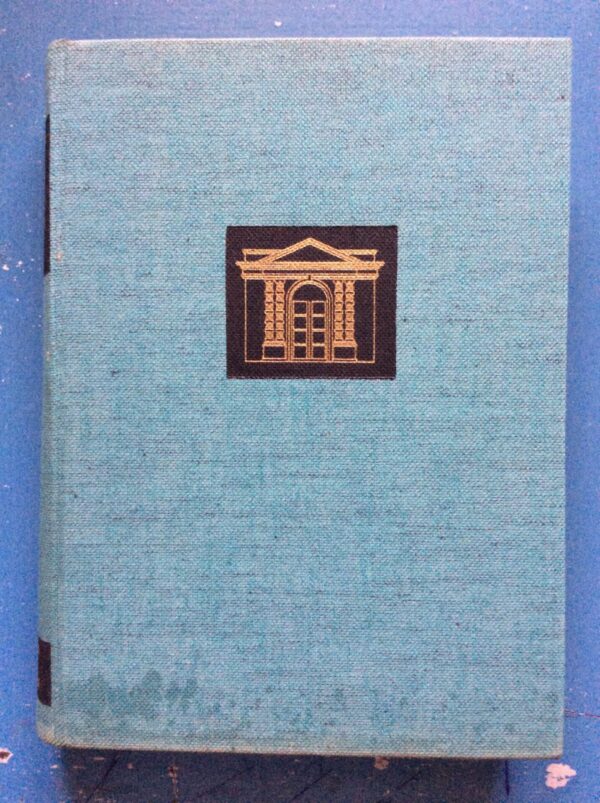
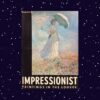
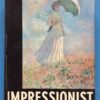

Description
About
From Goodreads:
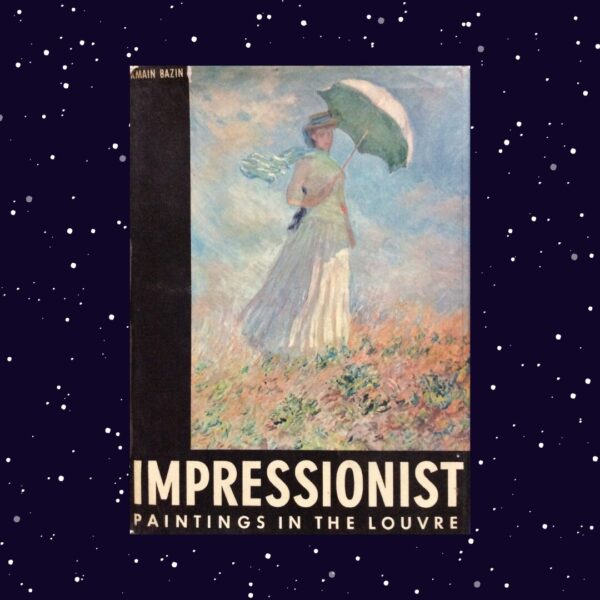
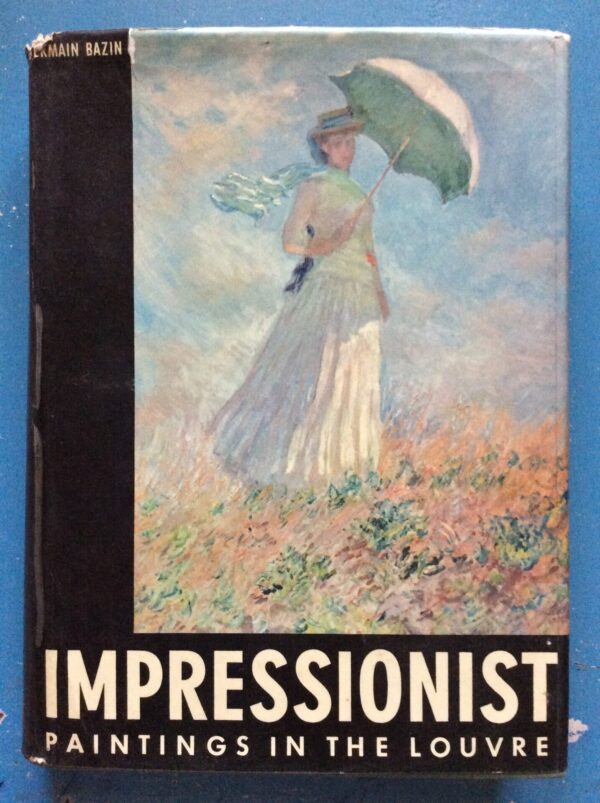
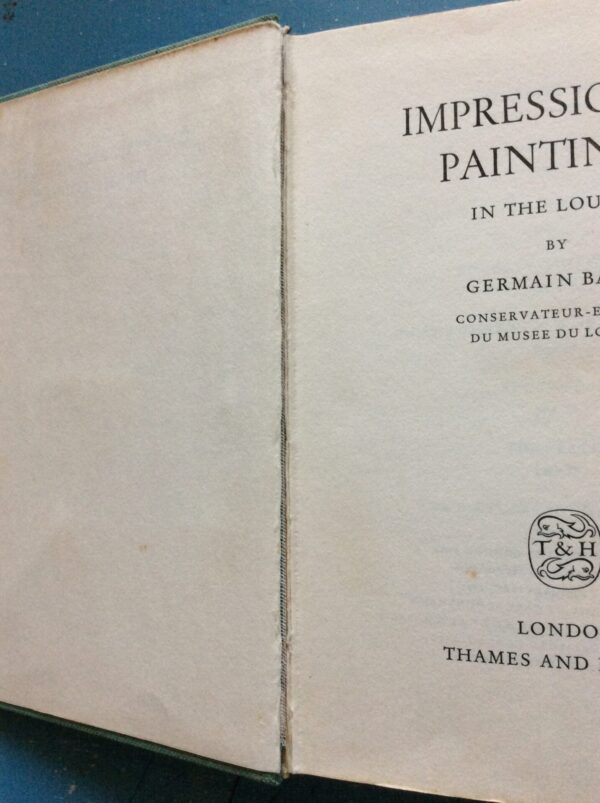
‘“Impressionism is still a living legend, with a firmness of purpose which adversity could not destroy, a purity of aim which, perhaps, was only equaled by the pioneers of the Renaissance, and which resulted in complete nonconformity. The boldness of these artists involved them often in tragedy, poverty, sacrifice, opprobrium, but also in triumphs. This legend has given them the aureole of martyrs.’
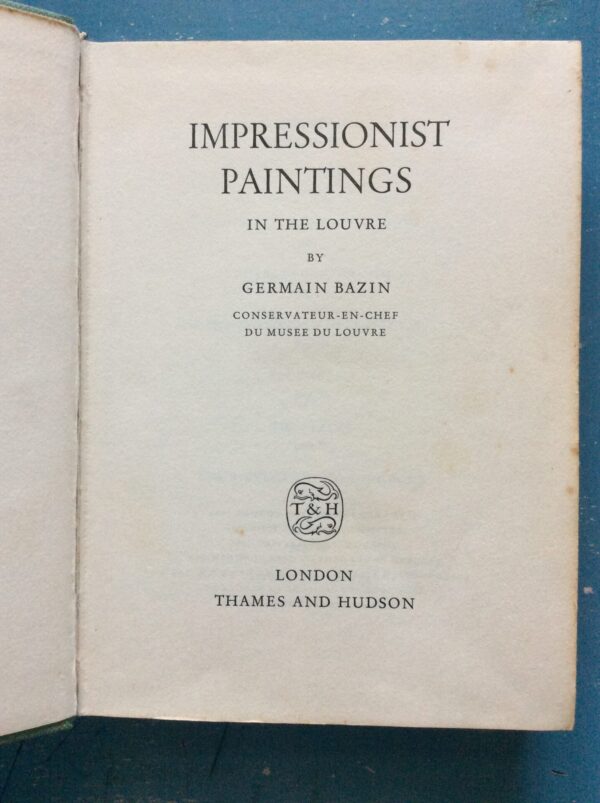
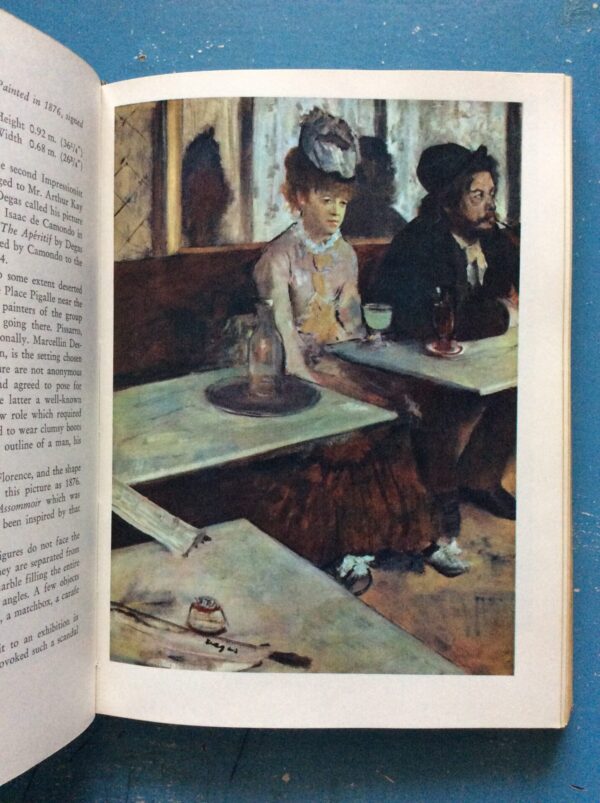
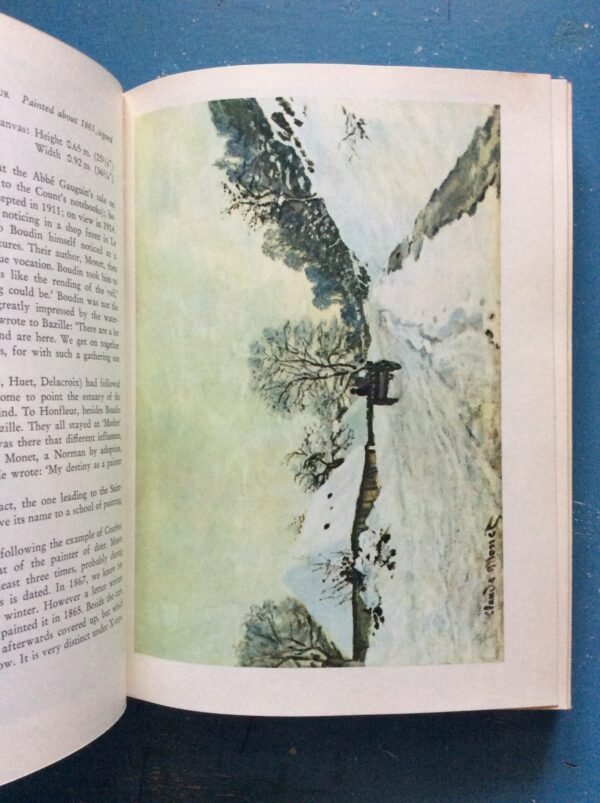
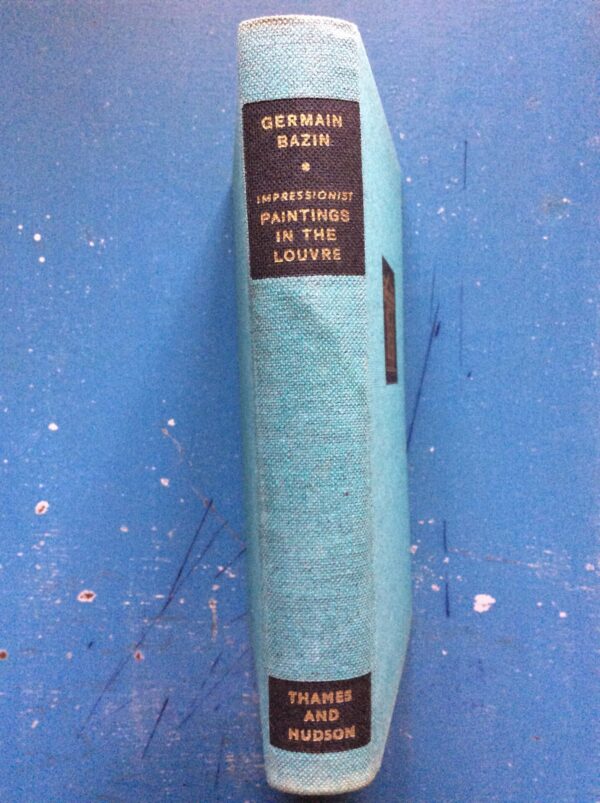
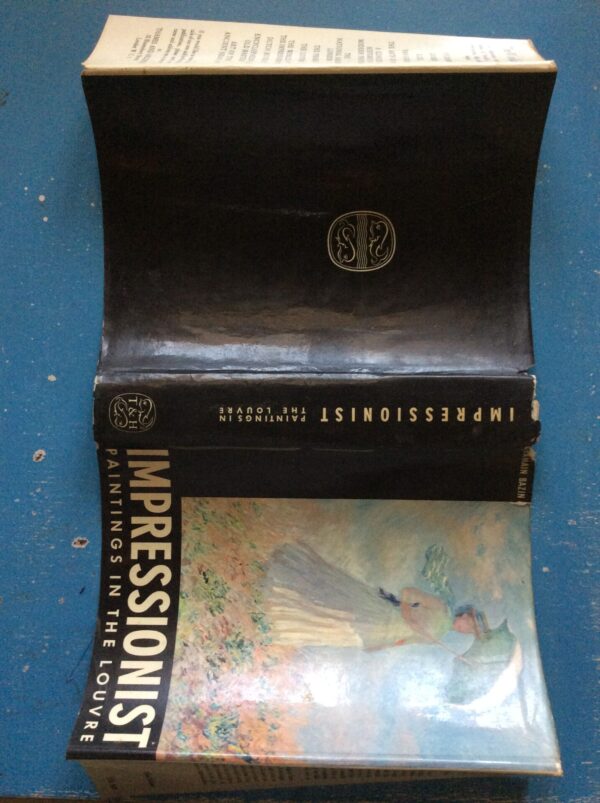
Thus Germain Bazin, distinguished Curator-in-Chief of the Louvre, introduces us to the galleries of the Jeu de Paume in the Louvre and the worlds’ most magnificent collection of Impressionist masterpieces. Here one enters the luminous, vibrant realm of the Impressionists and is encompassed by the warmth and delicacy of its landscapes, the gaiety of picnics by the Seine, and the elegance of nineteenth-century Paris. The finest of the galleries’ treasures have been selected for our delight.
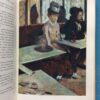
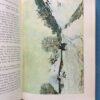
Over a hundred paintings are reproduced in full color, and each is accompanied by a full-age [sic] commentary which is a pleasure to read. In his fascinating introduction M. Bazin lucidly analyzes the sources of Impressionism in nineteenth-century life and art, and the appeal that its warm humanism continues to exert on us, and he traces the history and fortunes of the movement and the assembling of the collection by the Louvre.
With its remarkably informative text and wealth of illustrations this book is a superb introduction to the Jeu de Paume and to Impressionism itself.”
About the Author
From Dictionary of Art Historians:
“Curator of paintings at the Louvre Museum, 1951-1965; historian of 19th century French art. Bazin was the son of Charles Bazin and Jeanne Laurence Mounier-Pouthot (Bazin). He studied art history at the Sorbonne with both Henri Focillon and Émile Mâle, where he reached the baccalaureate and licentiate levels. After completing his studies at the Sorbonne, Bazin received a diploma in museology from the école du Louvre. In 1928, he joined the department of drawings at the école des Beaux Arts in Paris. His work at the école lead to a 1937 appointment as curator of department of paintings and drawings, Musée du Louvre, later adding an appointment as professor at the Free University of Brussels in 1934. He served in the French infantry from 1939-1940 during World War II, rising to captain, and after leaving the military, helped to protect French artwork during the Nazi Occupation of France. He was appointed professor of museum studies at école du Louvre in 1941. When he returned to his work at the Louvre, Bazin was appointed director of paintings and drawings. He published several books on a wide range of artists and time periods, including works on Hans Memling (1939), Fra Angelico (1941), and Camille Corot (1942). He married Suzanne Comtesse Heller Bielotzerkowka in 1947. Bazin became curator in chief at the Louvre in 1951 and began rearranging the paintings to reflect the museum’s vast collection of works from around the world. In 1953, he published L’Histoire de l’art de la préhistoire à nos jours, one of several major books and catalogues that he wrote or edited in the 1950’s. While he worked at the Louvre, Bazin led a project to restore and reframe the Impressionist paintings in the Musée Jeu de Paume, which was completed in 1958. In addition to producing scholarly writings, Bazin lectured on his research in Europe and America. His varied writings included art historiography and museology. He received numerous awards and honors for his work as a scholar and curator, including the Officer of the Legion of Honor (1954), Commander of the Belgian Order of Leopold (1956), and membership in the Institut de France. He retired as professor of museum studies in 1970. When he died at the age of 88, Bazin was writing a catalogue raisonné of Theodore Géricault’s work, which was completed posthumously in 1997. His many students included Nicole Dacos.”