
Description
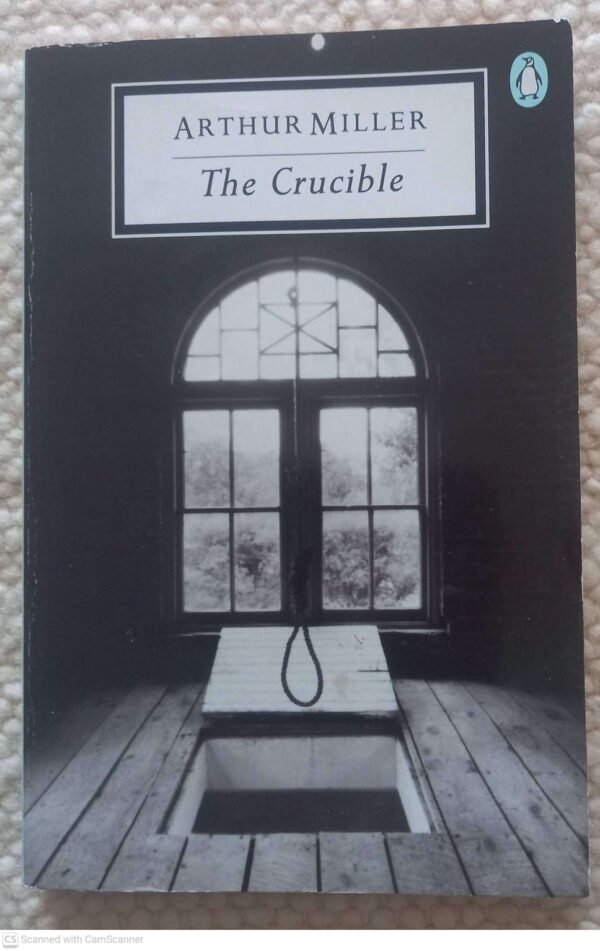
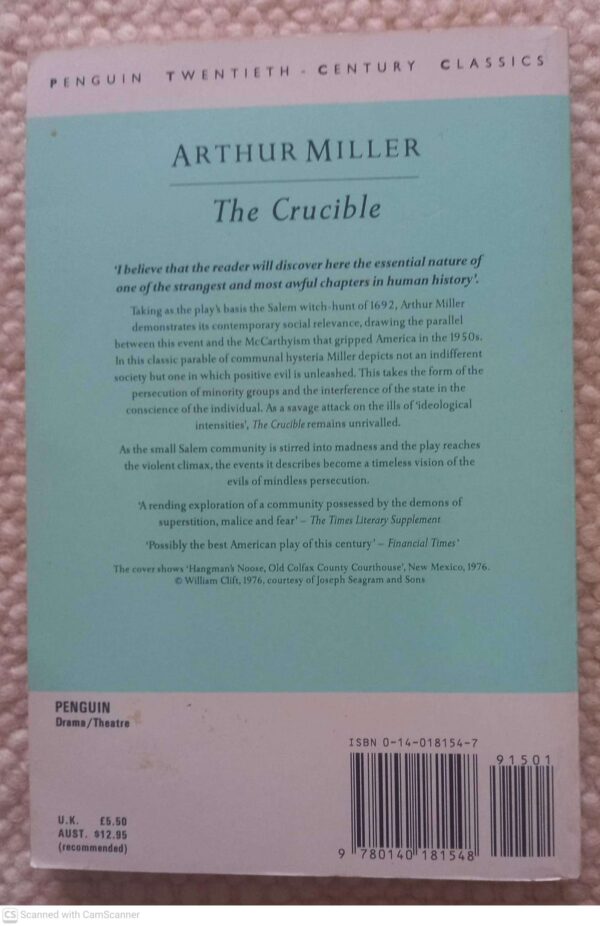
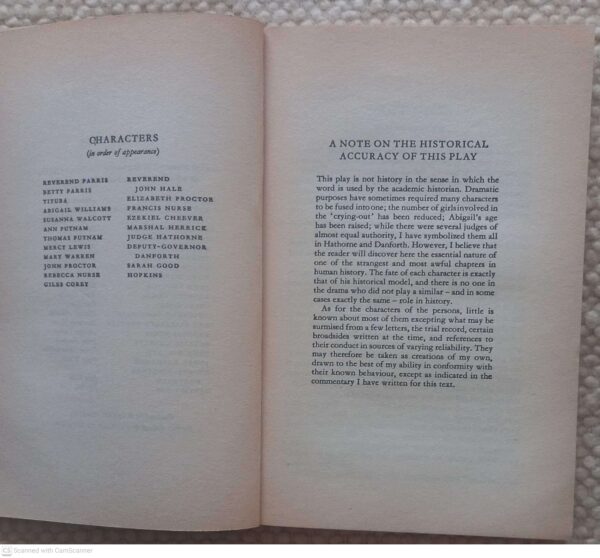
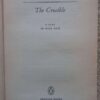
The Crucible by Arthur Miller is a powerful dramatic play that explores the devastating effects of mass hysteria, fear, and moral panic. First performed in 1953, the work is set during the Salem witch trials of 1692 and remains one of the most significant modern stage dramas in American literature.
The play follows the events in Salem, Massachusetts, where accusations of witchcraft rapidly escalate into widespread paranoia and social breakdown. As fear takes hold of the community, individuals are forced to choose between honesty and self-preservation, often with life-altering consequences. Through its portrayal of key figures caught in the accusations, the narrative examines how truth can be distorted under pressure and how authority, fear, and ideology can combine to devastating effect. The work also operates as an allegory for the anti-communist “witch hunts” of the McCarthy era in 1950s America, adding a further layer of political and historical significance.
This play is ideal for readers and students interested in classic drama, political allegory, and historical works exploring justice, fear, and human integrity.